
What Is Smart TV? A Complete Guide
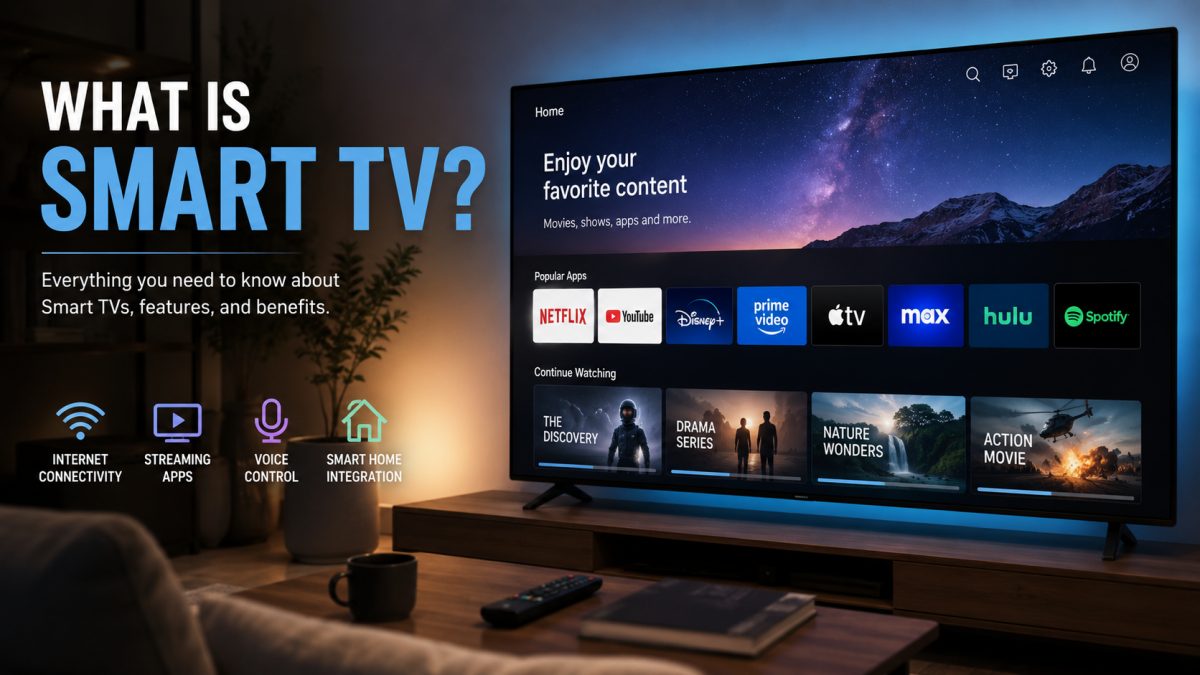
What is Smart TV? A Smart TV is a television that connects to the internet and provides access to streaming services, apps, online content, and advanced features that go beyond traditional television viewing. Modern Smart TVs combine the functionality of a TV, streaming device, and computer into a single entertainment hub.
Today, almost every new television sold includes Smart TV functionality. Whether you’re shopping for an OLED TV, QLED TV, Mini LED TV, or a budget television, smart features have become a standard part of the viewing experience.
What Does Smart TV Mean?
A Smart TV is a television equipped with internet connectivity and a built-in operating system. Similar to a smartphone, a Smart TV can run applications, receive software updates, stream content, and offer personalized recommendations.
Unlike traditional televisions, Smart TVs allow users to access streaming services, browse online content, listen to music, and even control smart home devices without needing external hardware.
How Does a Smart TV Work?
A Smart TV connects to the internet through Wi-Fi or an Ethernet cable. Once connected, users can access online content directly from the television’s interface.
Most Smart TVs include a dedicated operating system that organizes apps, settings, streaming services, and recommendations into a user-friendly dashboard. This allows viewers to switch between live TV, streaming services, gaming consoles, and other connected devices seamlessly.
Modern Smart TVs also support voice assistants, allowing users to search for content, change settings, and control compatible smart home devices using voice commands.
Popular Smart TV Platforms
Different television manufacturers use different operating systems. The most popular Smart TV platforms include:
Google TV
Google TV offers access to thousands of applications through the Google Play Store. It supports Google Assistant, personalized recommendations, and seamless integration with Android devices.
Samsung Tizen
Samsung’s Tizen operating system is known for its speed, clean design, and excellent app support. It also integrates with Samsung SmartThings for smart home control.
LG webOS
LG webOS features an intuitive interface and smooth navigation. It supports major streaming services and works with both Google Assistant and Amazon Alexa.
Roku TV
Roku TV focuses on simplicity and ease of use. Its straightforward interface makes it popular among users who want quick access to streaming content.
Benefits of a Smart TV
Smart TVs offer numerous advantages compared to traditional televisions.
- Access to popular streaming services
- Built-in apps and entertainment platforms
- No need for external streaming devices
- Voice control functionality
- Software updates and new features
- Personalized content recommendations
- Smart home integration
- Easy access to online videos and music
For many households, Smart TV functionality has become the primary way to consume entertainment content.
Can You Watch Netflix and YouTube on a Smart TV?
Yes. One of the main reasons people buy Smart TVs is access to streaming services.
Most Smart TVs support applications such as:
- Netflix
- YouTube
- Disney+
- Amazon Prime Video
- Apple TV+
- Hulu
- Max
- Paramount+
- Plex
- Spotify
Users simply sign in to their accounts and start streaming content directly on the television.
Do You Need Internet for a Smart TV?
A Smart TV can still function without an internet connection, but many of its features will be unavailable.
Without internet access, you can still watch content from gaming consoles, Blu-ray players, cable boxes, or antennas connected through HDMI inputs.
However, streaming services, software updates, voice assistants, and online applications generally require an active internet connection.
Smart TV vs Regular TV
| Feature | Smart TV | Regular TV |
|---|---|---|
| Internet Connectivity | Yes | No |
| Streaming Apps | Yes | No |
| Voice Control | Often Included | No |
| Software Updates | Yes | No |
| Smart Home Features | Often Available | No |
Today, most televisions sold worldwide include Smart TV functionality as a standard feature.
Are Smart TVs Good for Gaming?
Modern Smart TVs are excellent for gaming. Many premium models include advanced gaming features designed for PlayStation 5, Xbox Series X, and gaming PCs.
Important gaming features include:
- HDMI 2.1
- 120Hz refresh rates
- Variable Refresh Rate (VRR)
- Auto Low Latency Mode (ALLM)
- Low input lag
- 4K gaming support
Many OLED and Mini LED Smart TVs deliver exceptional gaming performance and image quality.
Are Smart TVs Secure?
Like smartphones and computers, Smart TVs collect certain data to improve recommendations and user experiences. Most manufacturers provide privacy settings that allow users to manage what information is shared.
Keeping your Smart TV updated with the latest software helps improve both security and performance.
Are Smart TVs Worth It?
Absolutely. Smart TVs have become the standard for home entertainment. Their ability to stream content, run applications, support gaming, and integrate with smart home ecosystems makes them significantly more versatile than traditional televisions.
Whether you enjoy movies, sports, streaming services, or gaming, Smart TV functionality provides convenience and access to a vast amount of content.
Should You Buy a Smart TV?
For most consumers, a Smart TV is the best choice in 2026. With built-in streaming services, voice control, personalized recommendations, and support for the latest entertainment technologies, Smart TVs offer outstanding value and flexibility.
If you’re looking for a new television, be sure to explore our guides to the best OLED TVs, QLED TVs, and Mini LED TVs to find the perfect Smart TV for your home.