
If you’ve been shopping for a new television, you’ve probably noticed that OLED TVs consistently appear at the top of expert recommendations. They are praised for their stunning picture quality, perfect black levels, and cinematic viewing experience. If you’re wondering what is OLED, the answer lies in a display technology that allows every pixel to generate its own light, creating superior contrast and picture quality compared to traditional LED TVs.
But what exactly is OLED, and why has it become one of the most important display technologies in the television industry?
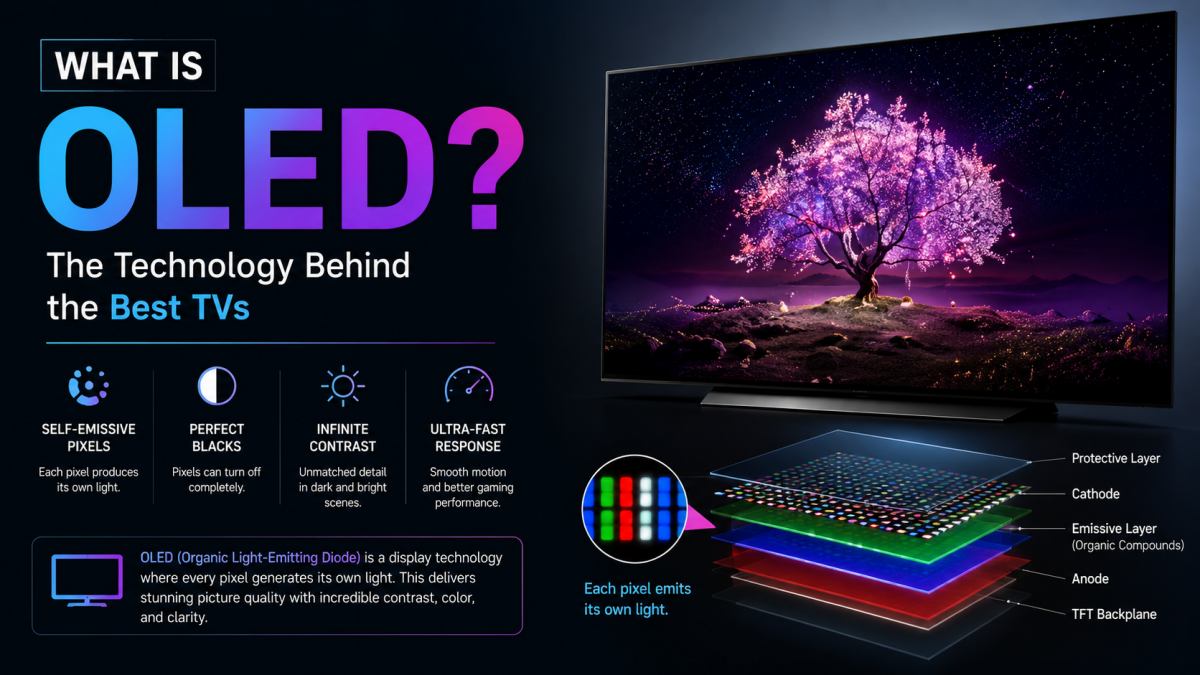
Unlike traditional LED televisions that require a separate backlight, OLED displays allow each individual pixel to generate its own light. This fundamental difference gives OLED TVs unique advantages that have helped them become the benchmark for premium picture quality.
What Does OLED Stand For?
OLED stands for Organic Light-Emitting Diode.
An OLED panel is made up of millions of self-emissive pixels. When electricity passes through the organic materials inside each pixel, they produce light directly.
Because every pixel creates its own light, OLED displays do not need a backlight. This is one of the biggest differences between OLED and traditional LED televisions.
How OLED Technology Works
Most LED TVs use an LCD panel combined with a backlight. The backlight shines through the panel to create the image you see on screen.
OLED technology works differently. Each pixel can control its own brightness independently. A pixel can be fully illuminated, partially illuminated, or completely turned off.
When an OLED pixel turns off, it produces absolutely no light. This allows OLED televisions to display true black instead of the dark gray tones often seen on traditional LED displays.
The Biggest OLED Advantage: Perfect Blacks
The ability to completely turn off individual pixels is the feature that made OLED famous.
When watching movies with dark scenes, OLED displays can produce black areas that are truly black. Since there is no backlight bleeding through the screen, dark scenes look more realistic and detailed.
This capability gives OLED TVs a major advantage when watching movies, TV shows, and HDR content.
What Is Infinite Contrast?
Contrast refers to the difference between the brightest and darkest parts of an image.
Because OLED pixels can switch off entirely, OLED displays are capable of what is commonly called an infinite contrast ratio.
This creates a sense of depth and realism that is difficult for many other display technologies to match.
Bright highlights stand out more dramatically against dark backgrounds, making movies and games appear more immersive.
Why Movie Enthusiasts Love OLED TVs
Many home theater enthusiasts consider OLED to be the best display technology for watching movies.
OLED excels in dark-room viewing conditions where black levels and contrast have the greatest impact on image quality.
Films often look more cinematic because shadows retain detail while bright highlights remain vivid and impactful.
This is one reason why many professional reviewers consistently rank OLED TVs among the best televisions available.
OLED and Gaming
OLED technology has become increasingly popular among gamers thanks to its incredibly fast pixel response times. Unlike many traditional LCD panels, OLED pixels can change state almost instantly.
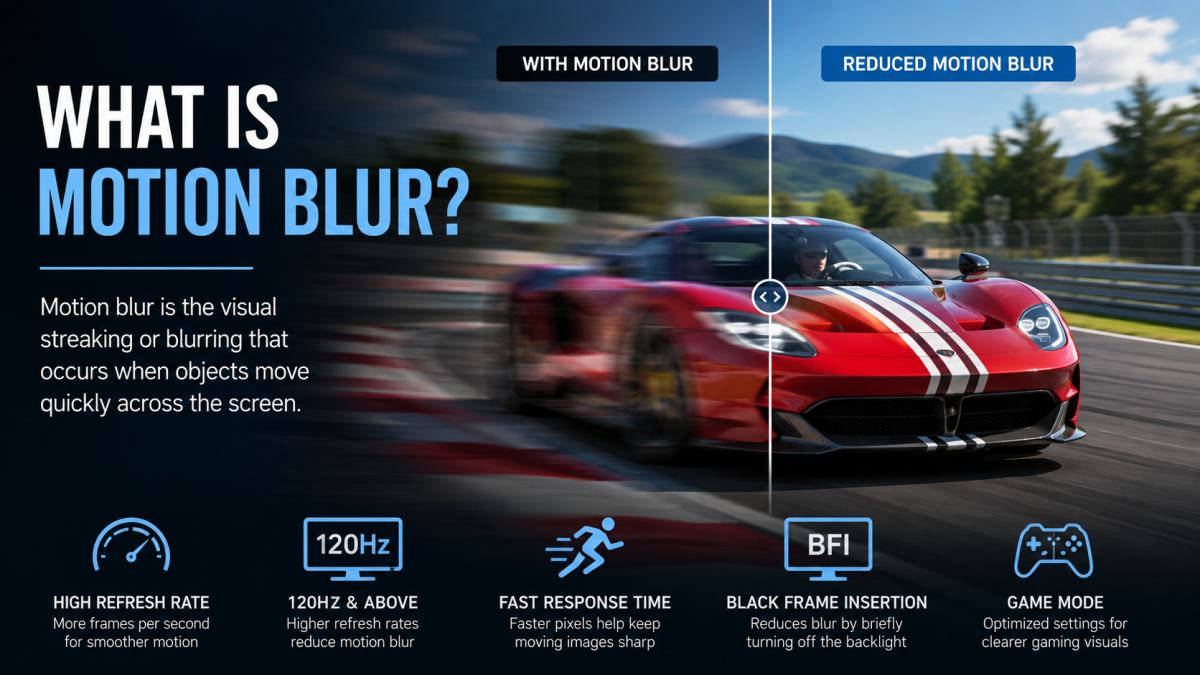
This helps reduce motion blur and ghosting during fast-paced gameplay, making moving objects appear sharper and easier to track.
Modern OLED TVs also include advanced gaming features such as:
- 4K resolution at 120Hz
- HDMI 2.1 connectivity
- Variable Refresh Rate (VRR)
- Auto Low Latency Mode (ALLM)
- Low input lag
These features make OLED televisions an excellent choice for PlayStation 5, Xbox Series X, and PC gaming.
OLED vs QLED
One of the most common questions among TV buyers is whether OLED or QLED is the better technology.
QLED TVs use a traditional LCD panel combined with a quantum dot layer and an LED backlight. OLED TVs use self-emissive pixels that generate their own light.
In general, OLED offers:
- Superior black levels
- Better contrast
- Wider viewing angles
- Faster pixel response times
QLED TVs often offer:
- Higher peak brightness
- Lower prices in some categories
- Excellent performance in bright rooms
For pure picture quality, many enthusiasts still consider OLED the reference standard.
OLED vs Mini LED
Mini LED is one of the strongest alternatives to OLED currently available.
Instead of using a standard backlight, Mini LED TVs use thousands of tiny LEDs grouped into local dimming zones. This allows much more precise brightness control than traditional LED televisions.
Mini LED TVs can achieve extremely high brightness levels and impressive HDR performance.
However, even the best Mini LED televisions still rely on dimming zones rather than individual pixels. Because OLED controls light at the pixel level, it generally delivers more precise black levels and superior contrast.
What About OLED Burn-In?
Burn-in has long been one of the most discussed topics surrounding OLED technology.
Burn-in occurs when static elements remain on the screen for extended periods and leave a faint permanent image.
Modern OLED TVs include several protection systems designed to minimize this risk, including:
- Pixel shifting
- Logo detection
- Automatic panel refresh cycles
- Screen savers
For most users who watch a variety of content, burn-in is unlikely to become a significant issue.
Who Should Buy an OLED TV?
OLED televisions are particularly well suited for:
- Movie enthusiasts
- Home theater setups
- Streaming content
- Gaming
- Dark-room viewing
- Users who prioritize picture quality
If image quality is your primary concern, OLED remains one of the best technologies available today.
Should You Choose an OLED TV?
OLED technology revolutionized the television industry by eliminating the need for a traditional backlight and allowing each pixel to generate its own light.
This breakthrough made it possible to achieve perfect black levels, extraordinary contrast, wide viewing angles, and outstanding motion performance.
Whether you’re building a home theater, upgrading your gaming setup, or simply searching for the best possible picture quality, OLED continues to set the standard by which many other display technologies are measured.
As OLED panels continue to improve in brightness, efficiency, and affordability, they remain one of the most compelling choices for modern television buyers.